The Feetra Islamic homeschool syllabus
The Feetra Islamic homeschool syllabus raises children upon the Qur’an and the way of Rasulullah ﷺ and his companions. It has two parts that run side by side: Part 1 is for the parent, and Part 2 is for the parent to teach the children. One year, four classrooms, four growth stages, and one SEEDS lesson every week that the whole family shares.
What the Islamic homeschool syllabus covers
Most homeschool plans start with the child. This Islamic homeschool syllabus starts with the parent, because children copy what they see. That is the Q of LUQMAN, qudwah: the parent fixes their own practice first. Then the family moves through one year of four 12-week terms, one per classroom, with every child following the same weekly theme at their own stage. Below is the Islamic homeschool syllabus in full, part by part.
How each lesson is taught comes from our Quran parenting method: ROOTS, LUQMAN, SEEDS, LIGHT, AKHLAQ and GROW. What is taught is set out on this page. Every ayah, hadith and dua in the syllabus is checked by our Islamic education advisors before it is published, and each card shows Disemak oleh with the advisor’s name.

Part 1: the parent track
One module a month, about 15 minutes a week
Each month the parent has one short lesson, one practice to live and one line of reflection in the parent journal. The twelve modules of this part of the Islamic homeschool syllabus follow the order Luqman taught: the parent’s own niyyah and worship first, then how to teach, then the family’s daily life.
Niyyah and the shepherd role
Why raising children is ibadah and an amanah. Practice: write the family’s “why”.
Bukhari 1; Bukhari 893, Muslim 1829; At-Tahrim 66:6
My wudu and solat first
Wudu and solat as the Prophet ﷺ did them, step by step with evidence.
Bukhari 159; Bukhari 631; Bukhari 828
The parent's daily adhkar
Morning, evening and sleep adhkar, said aloud where the children hear.
Bukhari 6306; Bukhari 2311
Teaching like Luqman
The six LUQMAN steps. Open every lesson with an endearment and a reason.
Luqman 31:12–19
Prophetic gentleness
Gentleness, controlling anger, and correcting without shaming.
Muslim 2593, 2594; Bukhari 6116
How the Prophet ﷺ taught
Questions, drawing, repeating three times, affection, greeting children.
Muslim 2581; Bukhari 6417; Bukhari 95
Modules 7–12: signs, Seerah, fairness, the Prophetic day, dua and muhasabah
Leading a nature lesson and a LIGHT circle, retelling the seerah, fairness between children, sleeping early, naming each child in dua, and a family review night.
Ali Imran 3:190–191; Bukhari 2587; Al-Hashr 59:18
Part 2: four growth stages in one Islamic homeschool syllabus
Siblings learn together
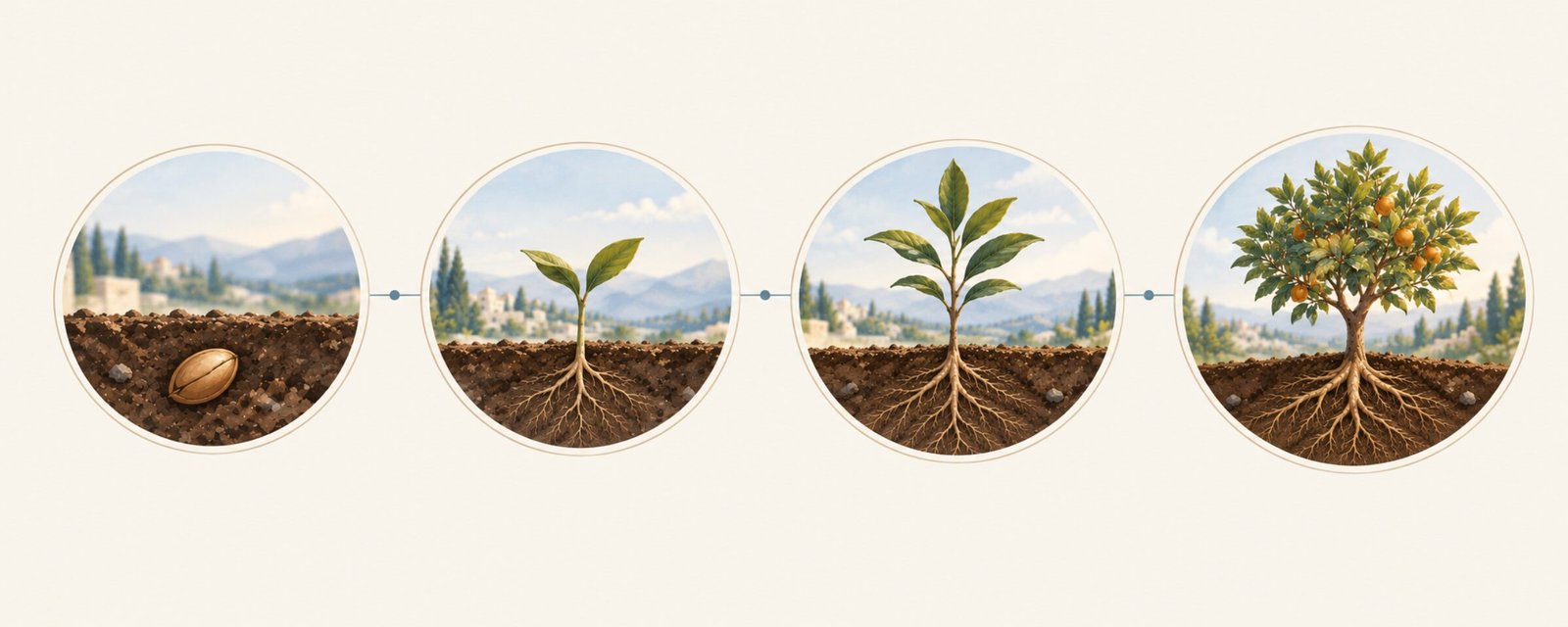
A good word is like a good tree, its root firm and its branches in the sky (Ibrahim 14:24–25). A child whose iman is rooted early stands firm later, so the Root stage gets the most care. Ages 7 and 10 follow the hadith on solat (Abu Dawud 495). Each stage also has its compulsory hifz, always with meaning.
Root, ages 3–6
Love of Allah and Rasulullah ﷺ, a warm bond with the parent, wonder at creation, first duas and adab. Hifz: Al-Fatihah and the three Quls, then on to Al-Fil as able. Nothing is tested by recall.
Sprout, ages 7–9
Solat learned properly, the ayah behind each sign, daily adab. Hifz: Juz Amma back to Ad-Duha, and Ayat al-Kursi.
Bukhari 2311
Sapling, ages 10–12
Solat kept firmly, explaining in their own words, real responsibility. Hifz: complete Juz Amma, the last two ayat of Al-Baqarah, the first ten of Al-Kahf, Surah Al-Mulk and Luqman 31:12–19.
Bukhari 5009; Muslim 809; Tirmidhi 2891
Fruit, 13+ and the aim at every age
Teaches younger siblings, leads the family circle, is an example at home and outside. The full 30 juz is an optional track with a qualified teacher.
Bukhari 5027
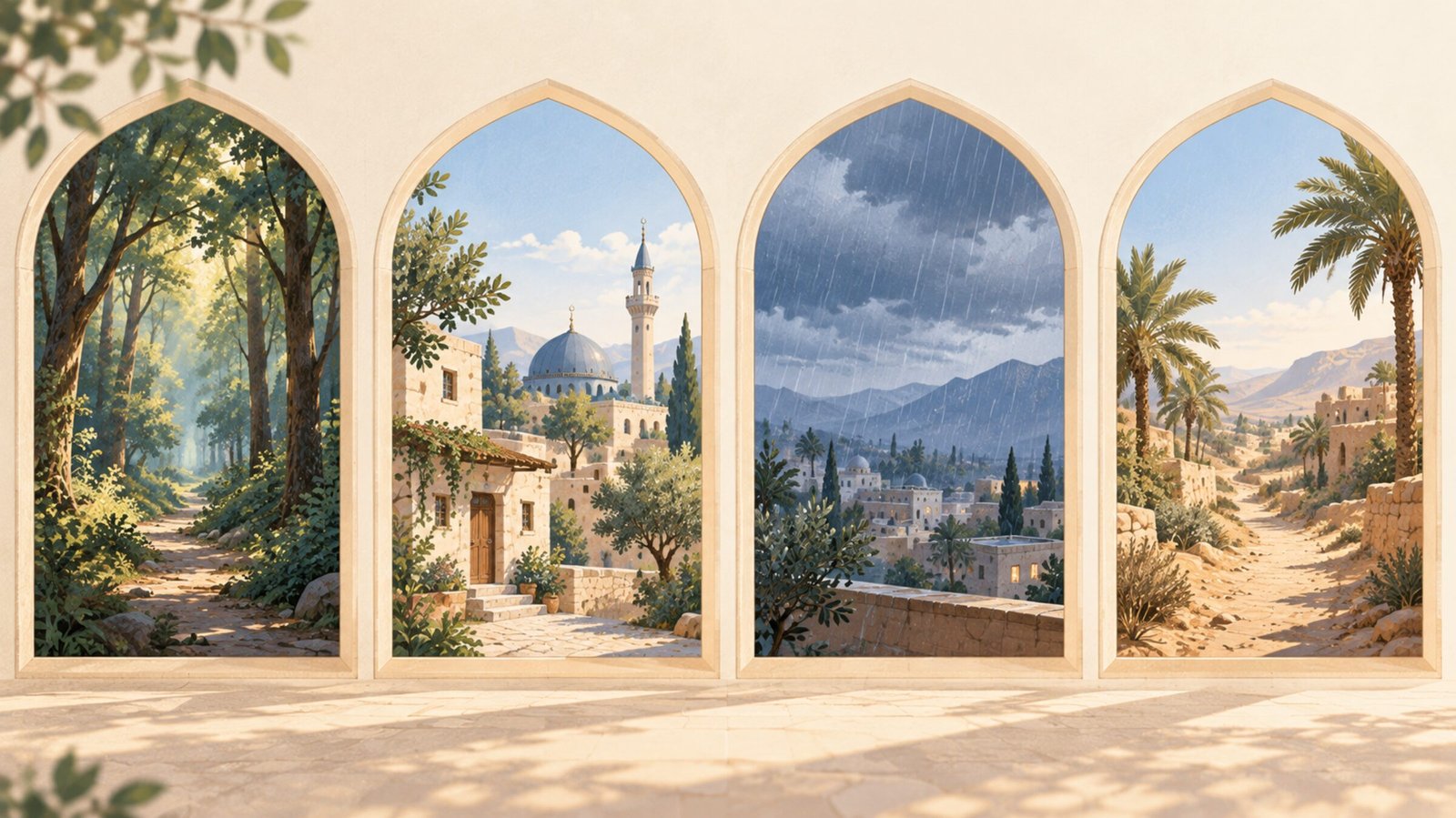
The year: four classrooms, one per term
Twelve SEEDS lessons each
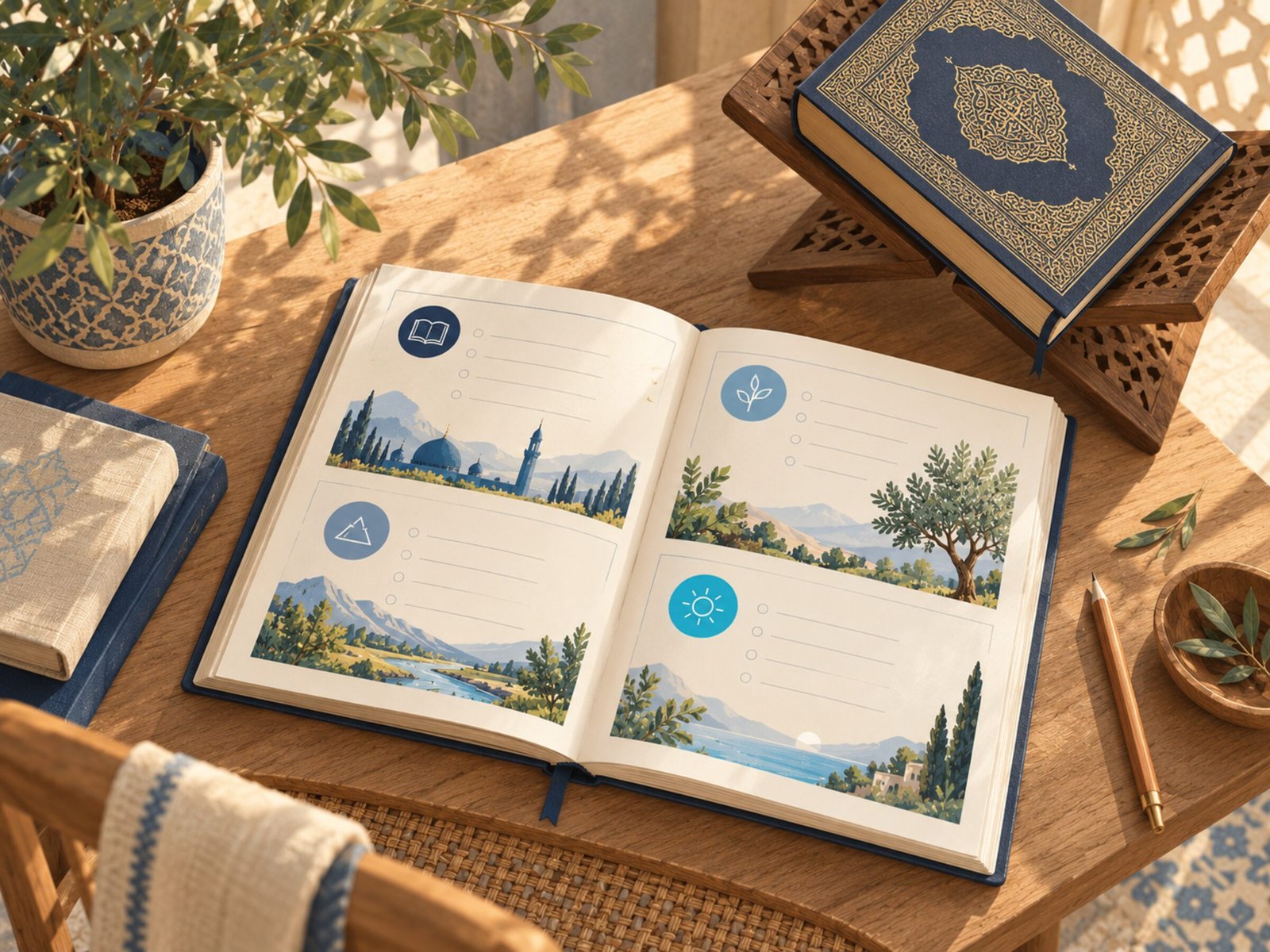
Each week is one SEEDS lesson: what the family Sees, the ayah or hadith they Encounter, and what they Do together. Term 3 is flexible, so when a real event happens, such as a flood, an illness or a new baby, the parent swaps that week in first.
Term 1, Nature: knowing Allah through His creation
Tawhid, wonder and gratitude. The night sky, rain, seeds, the bee, the ant, the camel, water, mountains and our own bodies.
Al-Mulk 67:5; An-Nahl 16:68–69; Al-Ghashiyah 88:17
Term 2, Environment: our home, masjid and community
Birrul walidain, siblings, neighbours, guests, the masjid, honesty in the market, and animals in our care.
Al-Isra 17:23–24; Bukhari 6014; Muslim 102
Term 3, Current Events: living through what happens to us
Patience and gratitude, hard days, floods, visiting the sick, a new baby, Ramadan, giving, Eid, and checking news before sharing it.
Al-Baqarah 2:155–157; Al-Hujurat 49:6
Term 4, Seerah: following Rasulullah ﷺ and the young companions
From the Year of the Elephant to Madinah, told at bedtime with Bedtime Seerah and turned into practice by day.
Al-Fil 105; Al-Ahzab 33:21
Term 1 of the Islamic homeschool syllabus, week by week
The pilot starts here, with the first term of the Islamic homeschool syllabus. Each row is one week: the sign the family sees, and the practice they live together.
Night sky and stars
A night-sky watch after Isha, then straight to bed.
Al-Mulk 67:5
Sun and moon
Track sunrise and the Subuh time for a week.
Yasin 36:38–40
Rain and clouds
Say the rain dua and make a rain gauge.
An-Nur 24:43; Bukhari 1032
Seeds and plants
Plant a seed and care for it all term.
Al-An’am 6:95; Bukhari 2320
Weeks 5–7: the bee, the ant and the spider
A garden watch, an ant trail with Sulayman’s dua of gratitude, and a web that teaches reliance on Allah.
An-Nahl 16:68–69; An-Naml 27:18–19; Al-Ankabut 29:41
Weeks 8–11: the camel, water, mountains and our bodies
Draw and label the camel, make wudu without wasting water, a family hill walk, and brain moves every morning.
Al-Ghashiyah 88:17; Bukhari 201; Luqman 31:16; Muslim 2664
Review
GROW check, and each child presents a favourite sign to the family.
Ali Imran 3:191
Tracks that run all year
Alongside the terms, four tracks of the Islamic homeschool syllabus keep going every week. They are introduced at the stage a child can manage, and nothing in them is scored or rewarded with prizes.
LIGHT tadabbur
One anchor ayah a week, reflected on together, with the meaning taken from recognised tafsir.
Sad 38:29
AKHLAQ, twelve traits
Gratitude, mercy, humility, truthfulness, trustworthiness, good speech, patience, generosity, forgiveness, modesty, courage and justice.
Bukhari 3559
Daily duas and adab
Waking, eating, dressing, leaving home, rain, sneezing and sleep, each from an authentic source.
Bukhari 6312; Bukhari 247
Solat from the hadith
Taught from “pray as you have seen me pray”, one step a week with its evidence card.
Bukhari 631; Bukhari 828
Guarding the garden
A tree is protected as well as watered, and the Islamic homeschool syllabus protects the home too. Some things common around us are left for Allah’s sake, and the child is always given the better thing in their place. “You will not leave anything for the sake of Allah except that Allah will replace it with something better” (Ahmad 23074). The final list is confirmed by Ustaz Usamah before publication.
So the Islamic homeschool syllabus uses Qur’an recitation and voice-only nasheed instead of music, celebrates the two Eids fully and marks real milestones such as finishing a surah or a first full fast, keeps every promise made to a child, never curses or shames, and gives each child equal gifts and time. We never mock others who live differently, including relatives; we keep adab and simply live differently.
Print and digital tools for the Islamic homeschool syllabus
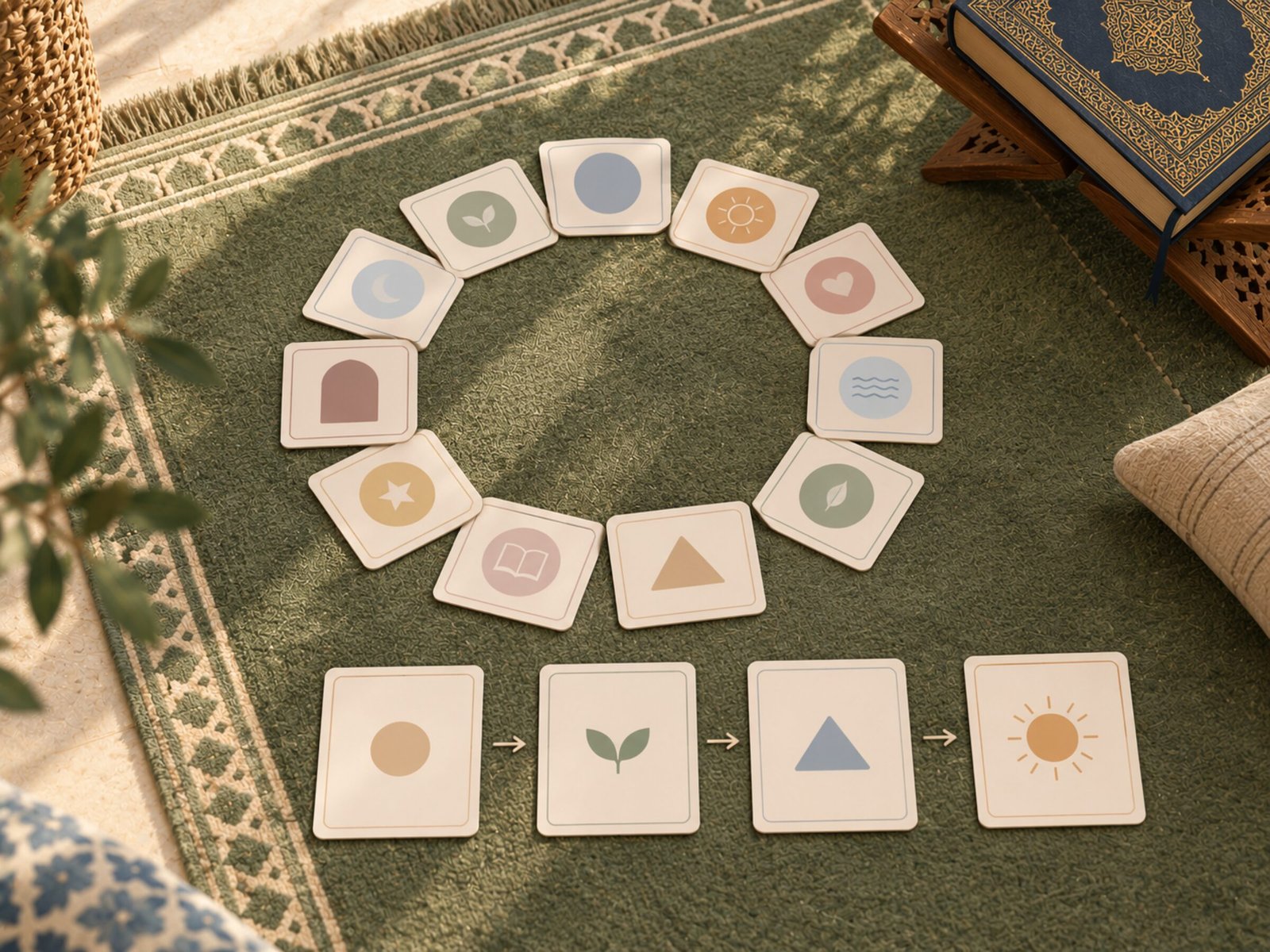
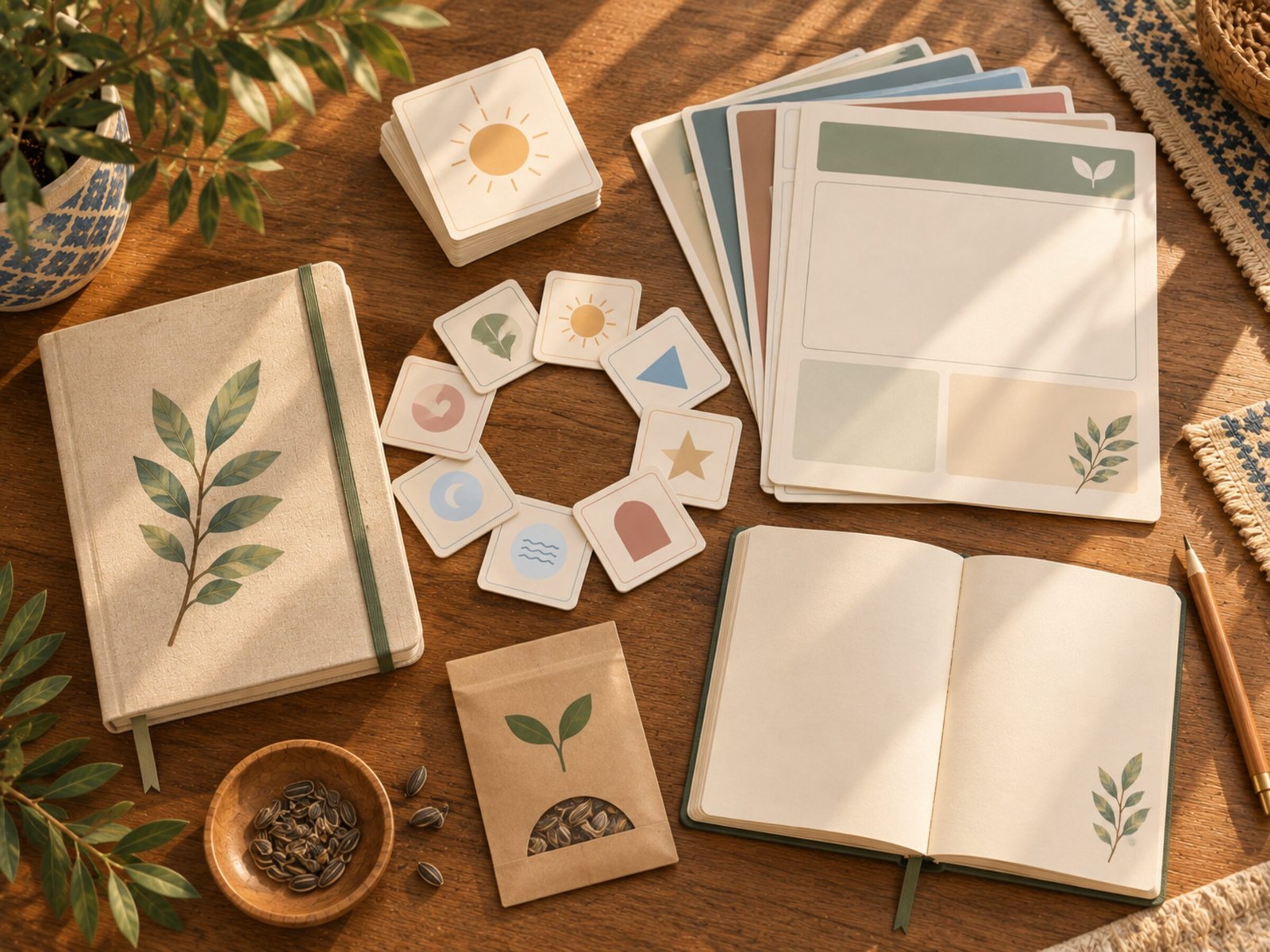
Print carries the hands-on, screen-light work with the child; digital carries planning, tracking and correct pronunciation. The first release is the Term 1 kit: dua cards for the Root set, solat step cards, 12 Nature SEEDS sheets, a child nature journal, LIGHT cards, the LUQMAN parent card, a brain moves deck and a wall planner, plus the family planner with JAKIM prayer times, Term 1 audio recited by Khalif Murtaza Khan, weekly puzzles and the GROW tracker.
Every printed item is also a downloadable PDF. Questions about time, ages and screens are answered in the Islamic homeschooling FAQ.
Start the Islamic homeschool syllabus with Term 1
The free pilot begins on 4 January 2027 with 15 to 20 families. See how the pilot works.